

Isaac Rosenberg: The Making Of A Great War Poet
Formats & Editions


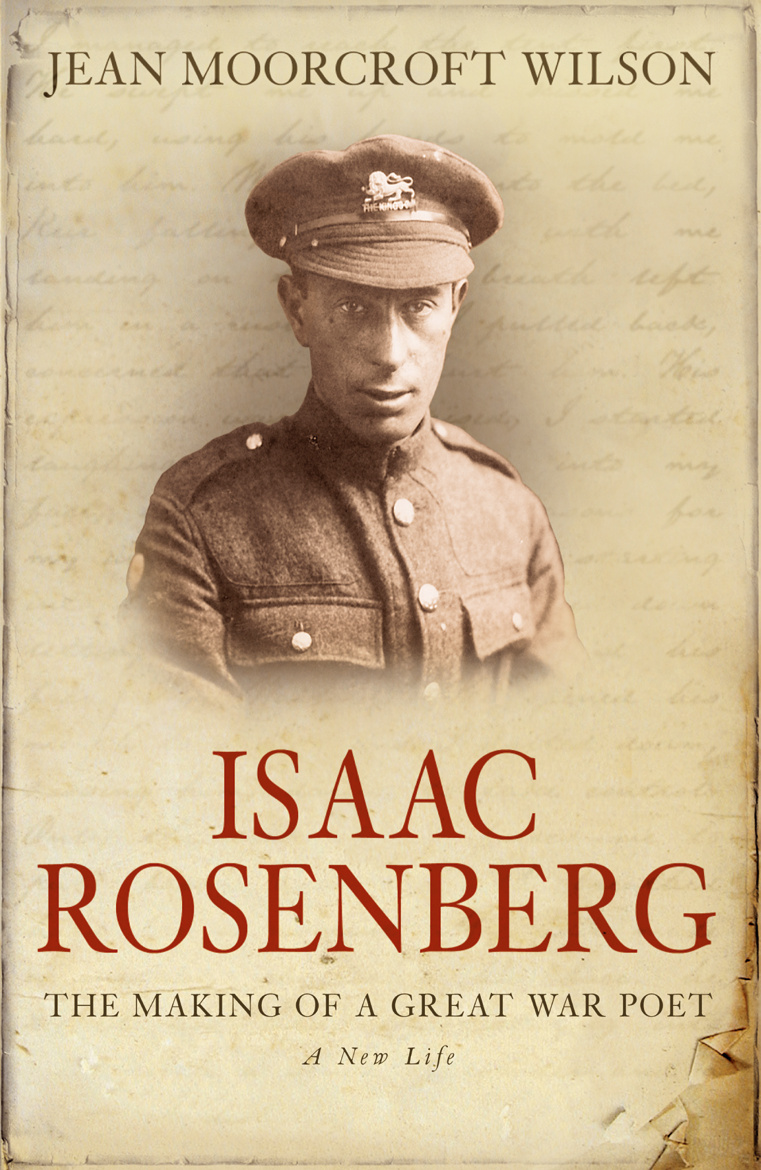
Siegfried Sassoon praised Isaac Rosenberg's 'genius' and T.S Eliot called him the 'most extraordinary' of the Great War poets. Rosenberg died on the Western Front in 1918 aged only twenty-seven, his tragic early death resembling that of many other well-known poets of that conflict. But he differed from the majority of Great War poets in almost every other respect - race, class, education, upbringing, experience and technique. He was a skilled painter as well as a brilliant poet. The son of impoverished immigrant Russian Jews, he served as a private in the army and his perspective on the trenches is quite different from the other mainly officer-poets.
Jean Moorcroft Wilson focuses on the relationship between Rosenberg's life and work - his childhood in Bristol and the Jewish East End of London; his time at the Slade School of Art and friendship with David Bomberg, Mark Gertler and Stanley Spencer; and his harrowing life as a private in the British Army.
Praise for Isaac Rosenberg
-
a compelling portrait of a poet who never lost his illusions about the war because he never had any in the first place - SUNDAY TELEGRAPH

Find a book you'll love, get our newsletter

This site is protected by reCAPTCHA and the Google Privacy Policy and Terms of Service apply.
© Hachette Aotearoa | New Zealand, All Rights Reserved · Site by Chook