

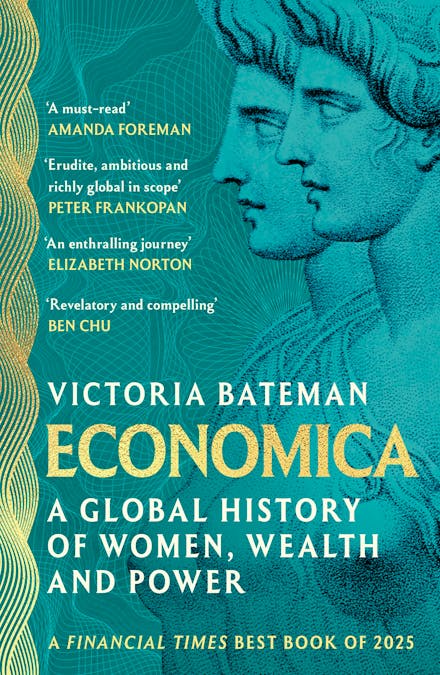


Economica: A Financial Times Best Book of 2025
Formats & Editions


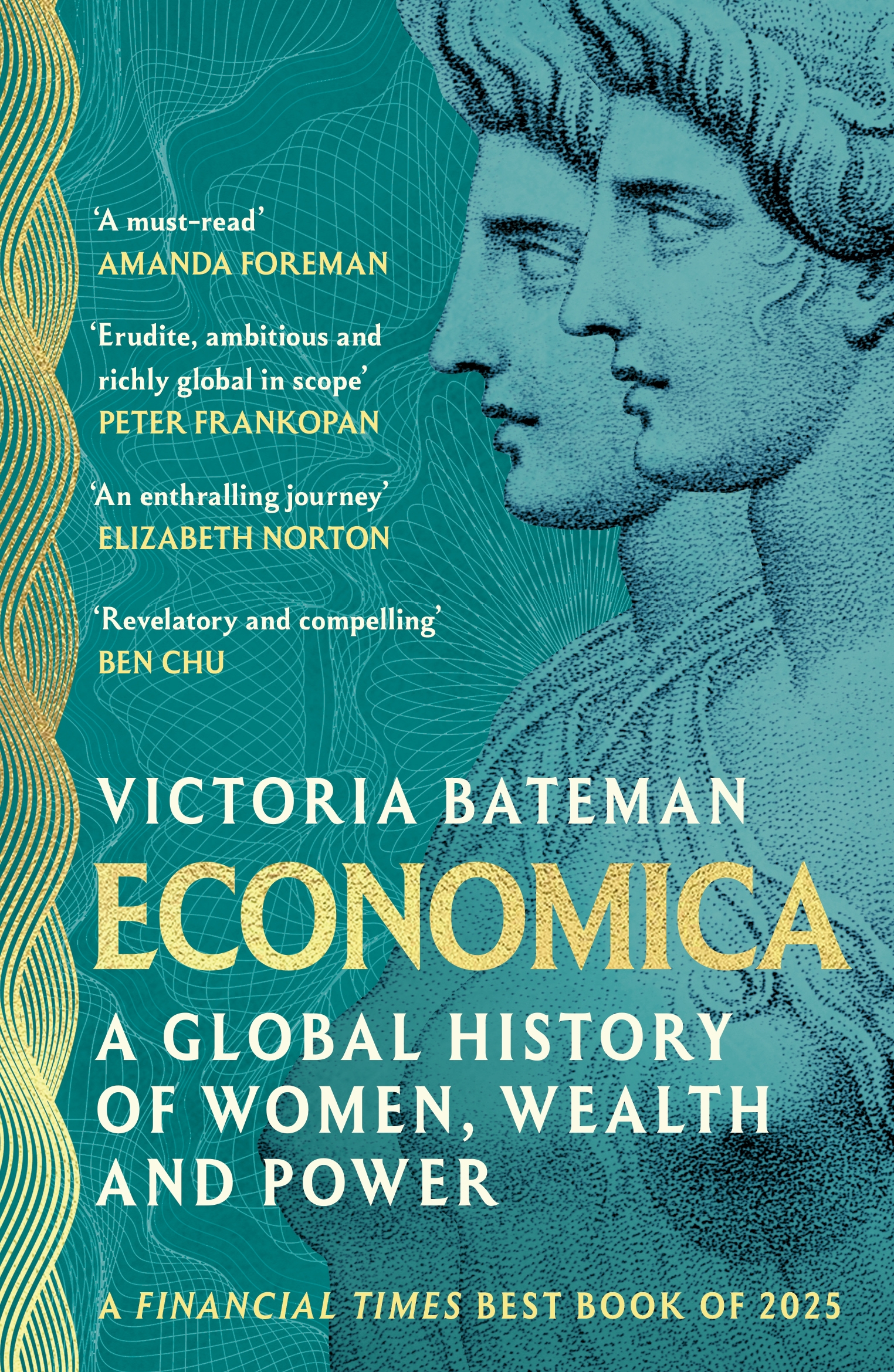
'Erudite, ambitious and richly global in scope' - PETER FRANKOPAN, author of The Silk Roads
'This book sets a new standard in economic history' - TIM HARFORD, author of How To Make the World Add Up
How many times have we been told that the working woman is a modern phenomenon? That men were responsible for the prosperity of humanity? That women's production was, for much of human history, confined to reproduction?
Economica shows that women have always been at the heart of economic progress, as entrepreneurs, merchants and industrialists - from Phryne, the richest woman in Ancient Athens, to Ching Shih, a sex-worker turned pirate who controlled trade in the South China Sea. Author Victoria Bateman also highlights the amazing stories of female workers who built the Pyramids, traded on the Silk Road and dominated London's medieval breweries.
Spanning the past twelve millennia, from the Stone Age to the present day, Economica rewrites our understanding of women's role in the economy, and tells a more accurate history of us all.
'Victoria Bateman's revelatory and compelling new book puts women at the very heart of mankind's economic history. Economica should help ensure that's where they will remain' - BEN CHU, BBC'A must-read for anyone interested in women's history and economic justice' - AMANDA FOREMAN, author of Georgiana and A World on Fire
Praise for Economica
-
Erudite, ambitious and richly global in scope, Economica shows how women's economic labour has so often been overlooked, ignored or relegated to obscurity. Victoria Bateman's fascinating book does not just offer a corrective to the past, but serves as a vital guide to our collective futuresAmbitious, wide-ranging and absorbing - this book sets a new standard in economic history Victoria Bateman's Economica is a must-read for anyone interested in women's history and economic justice. Bateman powerfully argues that women have always been central to economic life, from 18th-century shoemakers like Ann Askew to pioneers like Priscilla Wakefield, who founded the UK's first bank for women and children. For centuries, laws and social norms have constrained women's economic freedom, not only limiting individual potential but also undermining prosperity for all. Her research reminds us: economies thrive when women have the autonomy to work, earn, and control their wealthVictoria Bateman's revelatory and compelling new book puts women at the very heart of mankind's economic history. Economica should help ensure that's where they will remainThe economic history of half of humankind has broken out of its ghetto. The time has come for Victoria Bateman's comprehensive stocktaking-of how women figured in the economy, from the caves to the computers. And the time has come for you to read it.Who are the wealth-creators? Victoria Bateman shows that the standard image of heroic male entrepreneurs or inventors could not be more misleading; in Economica she tells a gripping tale of all the unsung female industrialists and workers who are missing from conventional economic historiesAn entertainingly readable, well-evidenced global history that places women at its heart. Taking a grand sweep across the ages, it delivers a powerful message about freedoms and challenges us to shape our planet in the interests of all our citizensTaking readers on an enthralling journey from prehistory to the modern world, Victoria Bateman rightly emphasises the importance of women's economic agency in human history. Economica puts women's work back into the story of the global economy. Making the case for women's central importance, readers will be left wondering how economic history could ever be studied without reference to one half of the world's population
Find a book you'll love, get our newsletter

This site is protected by reCAPTCHA and the Google Privacy Policy and Terms of Service apply.
© Hachette Aotearoa | New Zealand, All Rights Reserved · Site by Chook